





 For most visitors, the charms of Kelantan are found in the vitality of its culture and its remote, unsullied beauty.
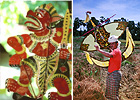
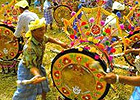
The traditional sports of giant kite-flying, top-spinning, silat, wayang kulit, bird-singing competitions and the making of exquisite handicrafts such as songket, batik, silverware and mengkuang products still remain fixtures here, offering a glimpse of traditional Malay culture in a truly spectacular setting.
Kelantan’s coastline is almost completely undeveloped, and offers a number of idyllic beaches. Vast stretches of tropical forest cover the state, and its southeastern corner forms part of the Taman Negara National Park. Kelantan also means the Land of Lightning. It has an area of 14,920 sq km, and is a land rich in culture and heritage, influenced by its Siamese and Chinese neighbours. This state borders Thailand in the northeast and Perak in the west, Terengganu in the east and Pahang to the south.
The major towns are Bachok, Pasir Puteh, Tanah Merah, Tumpat and Gua Musang. As a travel destination, Kelantan is well known for its golden beaches, marvelous handicraft and as a haven for food connoisseurs. You can find eating joints to suit your taste buds practically everywhere, from traditional Kelantanese food to Siamese cuisine. Shopping is also a must for visitors and there is a duty-free zone for shoppers at Rantau Panjang and Pengkalan Kubor.
As Kelantan was the landing point of the invading Japanese Imperial Army in World War II, Kota Bharu is home to the War Museum (itself a previously occupied army headquarters) that details and preserves the history of this turbulent period. Other museums in Kota Bharu – the Royal Museum and the Islamic Museum – tell equally fascinating stories.
 Lata Beringin is a cascading 120m waterfall near Kuala Krai, the verdant surroundings of Lata Beringin and an awe-inspiring view make this a very popular camping spot.
At 1,422m, Gunung Stong is Kelantan’s highest peak in the Dabong Forest Reserve. Also found in the Reserve is Gua Ikan (Fish Cave, said to hide a pot of gold from the Japanese occupation) and seven waterfalls, including Jelawang Falls – at 305m, it’s the highest drop in Southeast Asia.If you’re looking for a beach you can head over to some of Kelantan’s popular spots. With names like Beach of Whispering Breeze (Pantai Bisikan Bayu), Beach of Melody (Pantai Irama), Beach of Seven Lagoons (Pantai Seri Tujuh), and Beach of Moonlight (Pantai Cahaya Bulan), it’s no wonder Kelantan’s seafronts are one of its major tourist attractions. All are fairly close to Kota Bharu, and each has its own attraction to the casual tourist. Also nearby is Pantai Sabak; now a pleasant beach and a Malay fishing village, it was the site of invading troops in 1941.
If it’s shopping you’re after Kelantan is famed for handicrafts, and you’ll find some great deals (and atmosphere) in the bazaars and markets of Kota Bharu. Bazaar Bulu Kubu (Bamboo Fort Bazaar) is backed with silverware, batik, and more; New Central Market is a nice stop for authentic ambience and fresh produce; the Night Market is a great place to dine al fresco under the stars. About 4km north of Kota Bahru (on the road to Pantai Cahaya Bulan) is Kampung Penambang and the Songket (Cloth of Gold) Bazaar.