Paul French experiences first hand the threat to shipping off Indonesia’s Riau Islands where maps warn of the dangers of pirates
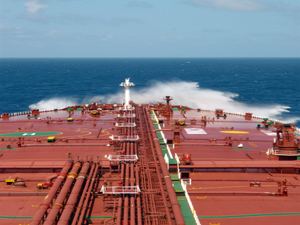
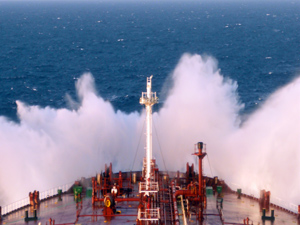
An hour out of Singapore and you lose your phone signal. You’re truly at sea. Given the opportunity to sail on a VLCC (very large crude carrier) oil tanker from Singapore to Taiwan, a mobile phone signal is about the only thing you haven’t got. Three square meals a day courtesy of an excellent Indian cook, a comfortable bunk with a shower, a porthole with a view of the seemingly endless ocean and a ship with enough room to get plenty of exercise. In fact our ship, the Shinyo Ocean, was the size of a small island – 350 metres long, 61 metres wide and riding up about 20 metres out of the sea – plenty big enough to go for a jog round the deck if the sea is calm.
But you’re far from alone. Aside from 180,000 barrels of oil you’re in a major shipping lane - an extension of the Malacca Straits. Consider that roughly 80 percent of the world’s sea-borne freight and oil passes along Malaysia’s coast through these Straits and round Singapore and that’s a lot of ships. Though hardly as crowded as Bukit Bintang on a Saturday afternoon there are other ships on the horizon – container ships with boxes piled high sailing west from China with goods for the shops of Europe and oil tankers, like ours, laden with the commodities the expanding manufacturers like China and Taiwan need. And then, when the sun goes down and night rolls in, you can encounter some other people in this area – pirates.
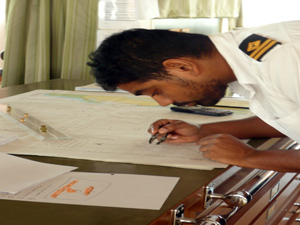
As we leave the relatively orderly waters of Singapore and Malaysia behind we edge up past Indonesia’s Riau Islands. Charting the route on the nautical maps laid out on the bridge one thing leaps out as you see the Riaus – ‘BEWARE PIRATES’ in bold, in capitals and in large type! When it’s dark the captain sends two men outside to sit at the back of the ship on pirate watch and then all the doors to the accommodation block, engine room and bridge are locked from the inside. The captain of the Shinyo Ocean takes the warning on the maps seriously – he’s sailed these waters before and he knows they can get dangerous.
The Riau Islands consist of the Riau Archipelago, the Natuna Islands, Anambas and Lingga Islands. They’re a province of Indonesia now with the capital in Tanjung Pinang though most people live on Batam. If a pirate wants to hide in the Riaus it’s not hard – the whole archipelago consists of 3,200 islands and a speedboat can disappear among them with ease.
“Petty thieves”, is how our capitain describes the pirates of the Riau Islands. You might imagine swaggering characters with parrots on their shoulders but it turns out they’re just ocean going muggers. We’re on one of the safest boats you can be on in this part of the world – to date pirates have never managed to board a VLCC tanker in Asian waters. The seas off Somalia, it should be noted, are a different story and pirates there, now officially the most pirate infested part of the world, come with RPGs and mini-helicopters. Quite simply a VLCC rides too high out of the water to board easily. The pirates of the Riau Islands tend to prefer smaller boats, fishing vessels and, if they’re feeling especially daring, container ships, as their prey.
A night’s pirate watch off the Riaus is pretty much what you’d expect – long hours peering out at a smooth sea watching for boats and feeling cold in the wee small hours. The night watch on the bridge will hopefully get on the walkie-talkie if anything shows up on the ship’s radar as being too close or refusing to identify itself but small, fast pirate craft can still sneak up on you. In conventional terms we’re not exactly armed to the teeth – not a cutlass or a blunderbuss among us – just two thick hosepipes with metal nozzles similar to the sort on fire trucks. These are the most effective weapons you can have – high power water hoses. Turn them on a ship that gets too close and they’ll either go away or get very wet and probably capsize – the pirates will be mad as hell but will probably retreat.
We were lucky – nothing came too close. A few unidentified small craft did appear but they stayed pretty distant, watched us for a while and then turned tail. If we’d been a smaller ship maybe they wouldn’t have been so easily persuaded to leave us alone – not everyone was so lucky that night.
A few nautical miles across the South China Sea from the Shinyo Ocean seven pirates in a high speed boat and armed with long knives boarded a chemical tanker. They tied up the ship’s captain and took his money before escaping in their speedboat. Later that night the same gang of pirates boarded a bulk carrier close by. They tied up the captain and another crew member, stole their money and personal belongings including a camera, mobile phones, shoes and clothes. Done with their looting they tied up the captain in the aft bollard and left the ship. Fortunately nobody was hurt in either incident. It was, as our captain had said, petty thievery – a mugging on the high seas.
These sorts of incidents have been common around the Riaus for centuries, since the first European ships sailed through these waters looking for spices – but they tend to increase in times of political upheaval and economic uncertainty. The current wave of piracy can be traced back to the political uncertainties of the 1990s and a time of falling wages for farmers. Perhaps in other parts of the world the young men attracted to piracy would settle for street crime but in the Riaus poverty sits next to shipping lanes transporting unimaginable wealth in terms of goods, oil and commodities. By our third day at sea we were east of the Riaus and in safe waters again.
Our pirate sighting was swiftly reported to the International Maritime Bureau’s Piracy Reporting Centre in Kuala Lumpur that maintain a 24 hour information centre and acts as the focal point against acts of piracy and armed robbery in the Malacca and Singapore Straits and out across the South China Sea. The Centre, established in 1992, is the major focal point for the fight against piracy in South East Asia. In the past pirates have harmed crewmembers or left them tied up and ships sailing dangerously out of control through busy waters. The KL Centre is financed by voluntary contributions from shipping and insurance companies and all its services are free of charge to all vessels irrespective of ownership or flag. Pirates aren’t going to easily go away but the services of the centre are essential.
As we passed the Riaus we altered course into deeper water after being notified of pirate activity along our planned route. We evaded the pirates but they continue to lurk and wait for unsuspecting ships and their crews.
  |
 |