 Making a Comeback
By Desmond Lim Zhengs
BATIK IS A SYMBOL OF MALAYSIA'S CULTURAL
IDENTITY AND A PROUD PIECE OF THE
COUNTRY'S HERITAGE. WHILE IT MAY STILL BE
THE STAPLE 'MUST-HAVE' FOR THE TOURIST
AND SOUVENIR SEEKER, BATIK IS FAST FALLING
OUT OF FAVOUR WITH THE LOCAL FASHION
SCENE. DESMOND LIM ZHENGS MEETS THE
MAN BEHIND A NEW SOCIETY SEEKING TO PUT
BATIK BACK INTO THE POPULAR DOMAIN.
 Preoccupied by
phone calls and
furiously replying
to emails, a stylish
figure stands a
few feet away in a
corner. Exuding a
somewhat 'calm
before the storm'
vibe, fashion designer Jovian Mandagie
walks over and apologises for the frantic
happenings that surround us. In just a
few hours the art pieces, clothing and
accessories around us – all decked out
in batik, mind you – will be part of the
presentation for Batik Is My Soul (BIMS),
a society and movement founded by
Mandagie that aims to sustain Malaysian
batik's pride and heritage.
Preoccupied by
phone calls and
furiously replying
to emails, a stylish
figure stands a
few feet away in a
corner. Exuding a
somewhat 'calm
before the storm'
vibe, fashion designer Jovian Mandagie
walks over and apologises for the frantic
happenings that surround us. In just a
few hours the art pieces, clothing and
accessories around us – all decked out
in batik, mind you – will be part of the
presentation for Batik Is My Soul (BIMS),
a society and movement founded by
Mandagie that aims to sustain Malaysian
batik's pride and heritage.
TRACING THE ROOTS
It is widely known that batik is a
traditional wax-resist technique of
printing using wax, salt, and chemical
or natural dyes, but the actual origins
of batik still remain a mystery; its roots
are ancient and difficult to trace. Batik is,
however, known to be an ancient art that
has been handed down over thousands of
years as it has remained widely popular
in Southeast Asia, especially in Indonesia
and Malaysia. Although the origins
disappeared along with the ancient ruins,
this craft has developed its own particular
aesthetic peculiar to Malaysia.
The bolder Malaysian batik is clearly
different from the Javanese traditional
hand-painted batiks still created in
Indonesia. "Indonesian batik is more
traditional," explains Mandagie, "and
the Indonesians preserve its heritage.
Those prints are ethnic to the location,
so Malaysian batik is different in its
technique and motif; it is brighter and
more vibrant in colour and look."
The most popular type of batik in
Malaysia is batik tulis, in which selected
areas of the cloth are blocked out
with hot wax, using a stylus or
canting, to create motifs. The cloth
is then dyed; the parts covered
in wax resist the dye and remain
the original colour. This process of
waxing and dyeing can be repeated
to create layers for more intricate
designs. The peninsula state of
Terrenganu's unique hemp batik
with its repetitive motifs and
Sarawak's tribal batik are both
wax-resist techniques unique to
Malaysian batik.
FALLING OUT OF FAVOUR
The Malay ethnic group has a long
association with batik, though
it is now an inherent part of
the national Malaysian identity.
Once the material of choice for
formal functions and glamorous
evening wear, batik has spiralled
down the food chain in the recent
years; a change that Mandagie laments.
"Malaysians don't appreciate batik
anymore. They have a kampung (village)
image of batik and are forced to wear it
most of the time," says Mandagie.
"I intend to change the mentality and
make batik wearable and get people to
respect batik again."
BRINGING BATIK BACK
Batik Is My Soul (BIMS), Mandagie's
brainchild, intend to focus on youth and
Batik Isfamilies. "We want to inspire students
and textile makers to 'think forward' with
batik and not to blindly follow trend,"
Mandagie says. As well as encouraging
people to extend the boundaries of
creativity, BIMS serves as a platform,
working with designers to make batik
more sellable and to maintain its
commercial value.
This batik movement isn't anything new.
Other status-raising activities include
the annual International Batik Festival,
local and international road shows, and
the Kuala Lumpur International Batik
Convention & Exhibition, all of which
highlight the Malaysian batik industry and
seek to reinforce batik as an international
force to be reckoned with.
Yayasan Budi Penyayang has been a big
advocate for promoting Malaysian crafts,
especially batik, since 2003. Under the
patronage of late Tun Endon Mahmood,
the wife of the fifth Prime Minister of
Malaysia, Penyayang established various
batik fashion design competitions such
as Piala Seri Endon and The Malaysia
Batik: Crafted for the World Movement.
Selecting a winner in the fashion, soft
furnishing, and handicraft categories each
year is based on creativity in adaptation of
batik to suit modern fashion and lifestyle
needs. Through this, Piala Seri Endon
has successfully encouraged creativity,
discovered new batik-making talent
and brought Malaysian batik onto the
international stage.
BATIK IS MY SOUL
While The Malaysia Batik: Crafted for the
World Movement had been successful
in promoting batik to the international
market overseas, BIMS aims to educate
the Malaysian public in Malaysia.
"BIMS is for Malaysians in Malaysia. I
believe that in order to promote batik
overseas, Malaysians should embrace
it too. Batik is not a piece of ancient art
to be showcased in museums. I want
to showcase batik beyond museums,"
Mandagie says passionately.
Mandagie used to think poorly of
Malaysian batik until he realised that this
ancient craft was falling out of practice,
and by being exposed to veterans of batik
and their techniques - each designer has
their own unique style - he discovered
his calling in preserving this heritage.
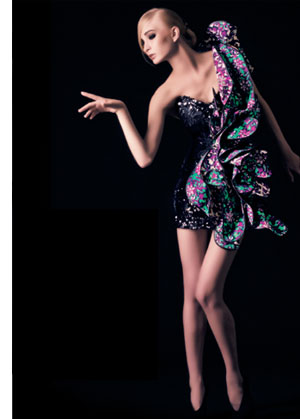
To exemplify the versatility of batik,
Mandagie challenged himself to create
a collection with batik as the subject.
Using existing batik materials, he
infused newness by incorporatingmodern silhouettes and proportions, lush
details, and a melange of mixed materials,
all while maintaining his aesthetics.
WITH A LITTLE HELP FROM MY FRIENDS
To try to take batik beyond clothing
and into all aspects of contemporary
lifestyle, Jovian Mandagie approached
accessories label Klutched, Suhara Jewel
Art, and footwear designer duo Rhea
Benson with a proposal to incorporate
batik into their products.
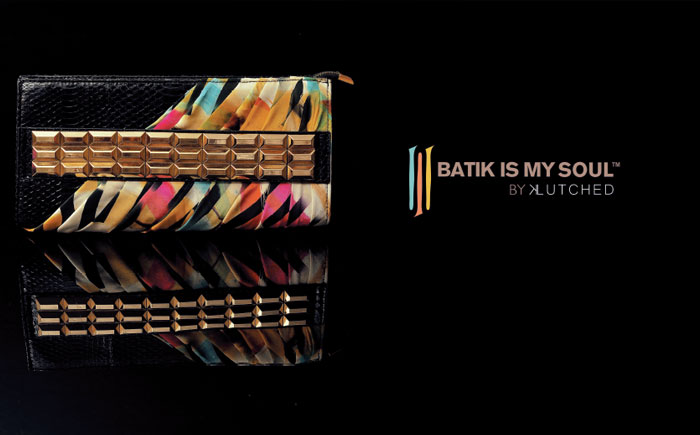
Klutched's batik-patterned clutches and
bags accented with studs and spikes have
a slick, contemporary edge while Suhara
Jewel Art's exquisite jewellery pieces are
inspired by the colorful interpretation of
flora and fauna in batik motifs.
A product of Piala Seri Endon themselves,
the designers of Rhea Benson, Rhea
Tan Yen Yen and
Benson Chen, share
Mandagie's desire
to raise the level of
awareness of batik among Malaysians.
The duo enjoyed the opportunity of
working with new techniques, as well as
the chance to create fascinating oneof-
a-kind pieces with batik, a rather
unconventional footwear material.
"Materials were thin and hard to work
with but we had fun experimenting with
batik prints," say the designers. "We
played with contrasting colours and tried
simplifying the designs, such as using
a chunky heel, to suit the fashionable
avant-garde aesthetic of Rhea Benson."
In the immediate future, BIMS plan to
host a nationwide exhibition as well as
inviting more designers to participate and
interpret batik in their designs. "Hopefully,
if there is good funding, we can organize
a batik fashion festival and we would
invite industry players from the region to
participate," Mandagie explains.
Given the early success of the movement
and the enthusiasm of local designers
to be involved with BIMS and help
preserve this unique legacy, hopes are
high for BIMS and the fate of batik. More
exposure afforded this traditional art
will make a huge impact on the batik
industry, bringing it one step closer to
its goal of commercial viability in the
fashion world.
For more details on Batik Is My Soul, visit
www.batikismysoul.com.


