| Bako National Park By Nikki Lugun |
||
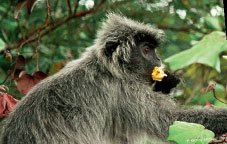
As Malaysia celebrated 50 years of independence, another celebration was being held in a well-known corner of Sarawak. The feathered, four-legged, gilled and limbless inhabitants of Bako National Park must have been wondering what the fuss was all about. Gazetted in 1957, this makes the Park the oldest in this part of the world and shares its anniversary with the nation’s independence. As an anniversary present, the Park got a shot in the arm with a whopping RM9 million allocation under the Ninth Malaysia Plan. However, it seems neither the wonderful furry and curious creatures nor the incredible variety of plant species will benefit from this, for the allocation is solely for the comfort and betterment of the tourists who visit the park. Already, RM1 million has been spent in building a terminal to cater to the approximately 350,000 visitors that make their way to the park annually. A brand new terminal with proper squat toilets and an impressive new jetty now awaits the intrepid travellers. Long before the term “eco-tourism” became a fashionable word, the Bako National Park in Sarawak was already practising this concept and long-time residents of Kuching like yours truly can recall wonderful trips made to this fascinating park. As a keen naturalist and photographer, I have made my way to this little corner of paradise countless times. But in all those years, I have not been able to get a good shot of the most popular resident of the Park – the proboscis monkey. However, on my recent trip, courtesy of the Forestry Department and the Sarawak Tourism Board, I was rewarded with wonderful shots of these elusive animals. I swear this was planted (on account of the presence of the Minister of Tourism Dato Wong Soon Koh and the CEO of Sarawak Tourism Board Gracie Geikie) for not only was there one solitary seemingly hung-over primate but there were three – and all on the same tree! It is unusual to see these odd-looking creatures with their huge pendulous nose and large pot-bellies so late in the morning and I am sure they were also wondering what they were doing there, cagily watching the entourage, making one wonder who were really on display – the animals or the people. If there is one thing I’d learned during my many trips to Bako it’s that no matter how good your camera and binoculars, they always seem inadequate for the task at hand. For the hundredth time I cursed I did not bring my extremely heavy tele-lens or my troublesome tripod. And then, I saw something move on the beach. It was furry and camouflaged against the mud-coloured sand – it was George, so named by my children – an albino bearded pig foraging in the sand for morsels of young crabs in their shallow sand homes. My breath gave way to a slow exhale. Wow. George and I have a history. He was the first bearded pig I met years ago when I stayed in Chalet No 7. That’s his territory. He never really ventured out unless it was at dawn or dusk. He must be one of the oldest inhabitants of Bako and my heart went out to the old boar. No amount of money spent – on new visitor accommodation, cafeteria or campground will make a difference. Bako will always be the same – at least with George around. Around every corner there seemed to be sights that would leave me breathless. Bako is probably the best place in Sarawak for wildlife experiences. At the many other national parks in Sarawak (18 in all) guides will delight in telling you that “wildlife is often heard but not seen”. Being “protected” for so long, the original inhabitants are less wary of humans. While the scenery is a spectacular site to behold with towering rock formations, it is probably best known for its short and long colour-coded trails often ending at the sea or at jungle waterfalls. It is these trails that make it possible to see almost every type of vegetation found in Borneo. Twenty five distinct types of vegetation form seven complete eco-systems – Beach Vegetation, Cliff Vegetation, Kerangas or Heath Forest, Mangrove Forest, Mixed Dipterocarp Forest, Padang or Grassland Vegetation and Peat Swamp Forest. Most of the different vegetation types are found close to the park Head Quarters at Telok Assam. Animal watchers can usually find long-tailed macaques, silvered langurs or leaf-monkeys, water monitors, plaintain squirrels and mouse deer right on the doorstep of the chalet they’re staying in. They’re not shy creatures. The friskiest are the macaques who would grab your bag right out of your hand given half a chance. The Park Rangers will tell you that under no circumstance should you ever feed an animal. Feeding animals disrupts the natural ecosystem of the park, plus years of hand feeding these animals have made them partial to junk food. If you are into bird watching, there are more than 150 species to look out for. To appreciate the full variety of Bako’s bird life however, hit the trails or look for them in the mangrove swamps. The park also offers many ranger-led programs and educational sites and these can be informative and educational. A night walk through the forest near the Park HQ may reveal the flying lemur, pangolin, bats, tarsier, slow loris and palm civet. And if the tide is out, look into the rock pools for crabs, anemones, and starfish. If you have plenty of time to spare, there are a variety of accommodations to choose from (if one does not mind pink satin curtains or mismatched linoleum covering the beautiful wooden flooring). Park accommodation consists of three-bedroom chalets, two-bedroom lodges, four-bedroom hostels and a camping ground. Barbeque pits are available for visitors to prepare their own meals. Established as Sarawak’s very first National Park, Bako is indeed an experience. The visitors that descend upon the Park each year include guests that have come back again and again to enjoy awe inspiring views, fascinating wildlife, and unique natural features. When the authorities established Bako in those days even before independence, little did they know that this tiny 2,727ha piece of jungle would become one of Sarawak’s most-visited National Parks. Situated just at the tip of the Muara Tebas peninsular and about an hours journey by road and boat from the capital city of Kuching, Bako is friendly yet mysterious, breathtaking yet simple. In all, it’s a back-to-nature destination that will knock your socks off! The beauty of Bako is hoped to remain the same despite the impending “development”. With all the additional facilities provided for visitors, there can surely be an influx which will contribute towards the tourism industry. Crowds can certainly take their toll on the park, so those who visit should do so expecting to exercise a certain degree of care to ensure that this amazing park will be around for many more millennia. |
||
|