| Rumble in the Jungle By: Gigi Ivanna |
||||
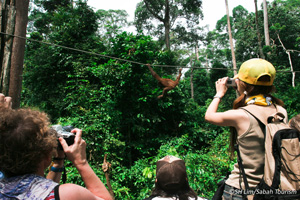
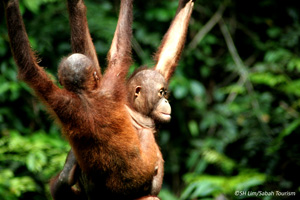
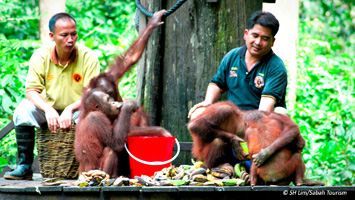
Zoom! Malaysia is a government campaign that has been travelling state to state urging locals to holiday in Malaysia. For the state of Sabah, the Ministry decided to steer away from the tried and tested Mount Kinabalu and Sipadan attractions and chose Sepilok instead as the main focus destination. The Rainforest Discovery Centre (RDC) was the launch pad for the state level campaign. “We’ve been selling Mount Kinabalu and Sipadan for ages. We don’t want to always promote the same thing. We must go beyond that. What we want to do with this campaign is highlight different products in the State so that tourists will have more choice,” said Tourism Minister Dato’ Sri Azalina Othman. Located within the Kabili-Sepilok Forest Reserve, the RDC was opened by Prime Minister Datuk Seri Abdullah Ahmad Badawi in August 2007 and thereafter placed under the care of the Sabah Forestry Department. The primary function of the reserve is to create public awareness and appreciation of the importance of conserving forests and it’s the perfect place to go for those wishing to learn more about the rainforest. Having armed myself with the facts courtesy of the exhibition area in the main building, it was time to experience the rainforest in all its glory so I struck out on one of the many jungle trails. It was so peaceful soaking in the calm of the towering trees above and breathing in the fresh, earthy smells of the forest. A good way to appreciate the myriad sounds is to close your eyes and sit still, allowing the birdsong and the low drone of insects to fill your ears. The RDC is a haven for bird watchers with “twitchers” from around the world descending on the reserve to catch a glimpse of the rare Borneo Bristlehead, unique to Sabah. What I enjoyed most was the 150 metre-long steel canopy walkway 25m above ground that provides a spectacular view of the surrounding lush jungle. The walkway is not quite completed but once all eight towers are built and connected, it will give visitors a chance to walk a distance of 1km through the forest canopy. After the walk, cross the suspension bridge over the lake and head to the Plants Discovery Garden which has a collection of the native orchids and pitcher plants found in Sabah. The 1-hectare garden has strategically placed information panels about the plants and their importance. Since the RDC is only 2km from Sepilok Orang Utan Rehabilitation Centre, the largest and oldest Orang-Utan Rehabilitation Centre in the world, it would be crazy not to see these amazing apes. |
||||
|
||||