| Make Tracks By: Ashleigh Seow |
|||
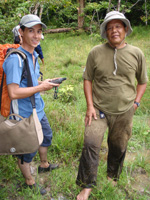
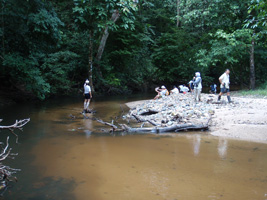
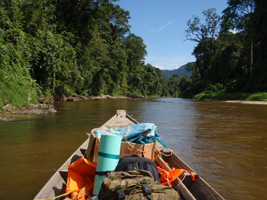
The 120,000 hectare Ula Muda is the largest remaining tract of forest in the state of Kedah. The area abounding with wildlife needs visitors now if it is to halt the loggers and remain in its current pristine condition writes Ashleigh Seow Imagine a forest where no human beings have lived for over 50 years. That is the situation in the Ulu Muda wilderness area up in the north of Malaysia near the Thai border. During the Communist Insurgency (1967-1989), the few inhabitants, including the aboriginals, were resettled to deny the enemy access to them. Ironically, this has been good for the forests and the wildlife – conflict, it would seem, can be less devastating than development. This huge area is home to many endangered animals such as the rare mountain goat, serow, the seladang or gaur, elephants, tigers, tapir and many smaller but no less important species. Ulu Muda is a recognised biodiversity hotspot and recently featured on Animal Planet. One of the few monsoonal rainforests in Malaysia, the Ula Muda climate has dry and cool seasons more like Thailand or Burma and unlike the equatorial rainforest elsewhere in Malaysia. Our guides were wild honey collectors who, after hostilities ceased in 1989, returned to harvest the honey of the aggressive Giant Honeybee, Apis dorsata. During the collecting season they build rickety-looking scaffolding on the tall tualang trees to reach the hives. From Muda Lake we journeyed in Thai-style long tailed boats up a wide river. Walking along the river bank we saw elephant, boar and lizard tracks. The lizard would have been about three metres long. After camping at a small tributary near the edge of the primary forest, we went to three of the 30 salt licks in Ulu Muda. The first was a normal salt lick but the second was simply astounding. It was a salt lick-cum-hot spring combination. The stream water was cool but less than a metre away the geothermal water was bubbling up to produce a light mist. The water was found to be over 60°C, too hot to hold your hand in. A high observation hide had been built for watching the creatures that come for the water and to bathe. Viewing success depends on total silence, being still and of course lady luck plays her part. A friend on a previous trip had lots of luck and was kept awake by trumpeting elephants! That night a herd, probably wild boar, crossed the river 20 metres from our campsite. Disturbingly, we later saw a poacher’s hide near another salt lick and that night we heard a gunshot close by. Returning, we were fortunate to see about 40 hornbills fly past in their V formations creating their characteristic steam engine sound. Over the next few days we were able to count nearly 200 birds identifying five of the eight hornbill species in the area. There is no tourist industry in Ula Muda yet. The NGOs that operate in the area work with the one operator. Ron has consistently shown he can mount minimal impact trips. He is a cheerful and caring man who genuinely loves the forest and unlike the locals, Ron removes any rubbish that his tours create. UM is a remote area and your guide needs to have medical evacuation experience and safety equipment such as radios and stretchers. He also arranges permits. Once in the primary forest there were some enormous trees, many that are over 500 years old. We visited a beautiful wild cave and were told by Hymeir, our cave guide, that a Buddhist statue had been found as well as pottery shards in the cave. The cave décor was impressive and unusual. The ceiling was a lovely green dappled with white spots like the skin of a whale shark. No one knew why. The formations were fascinating and as the cave had plenty of skylights there was never total darkness. Exiting the cave we found serow droppings indicating that this magnificent animal was still in the area. The wilderness is still a restricted zone and access is controlled. But the regulations only keep out the law abiding. Formal peace has not brought peace to the forest. Armed men still walk the forests illegally hunting valuable and rare animals and smuggling rare plants and forest products which fetch a fortune in the traditional medicine market. Short-sighted logging, poaching and incompetent exploitation of UM’s natural resources are likely to have far-reaching ramifications. Malaysia is one of the only continental Southeast Asian countries to have full control over its rivers. The UM catchment area supplies high quality water to the industries of Penang and drinking water to people in Kedah and Penang. Even more importantly, it irrigates the rice basket of Malaysia and feeds several millions more. The dams and lakes supplying this water will be very adversely affected should the forest catchment of the UM and other rivers be logged. A coalition of various NGOs and the Friends of Ulu Muda, are seeking to preserve UM and believe that one of the best ways to raise awareness is for people to visit this amazing wilderness. The coalition hopes that these visitors can provide an important source of revenue for the area. It also hopes that those who experience the pristine nature of UM will be its best ambassadors and the best hope for the area to remain untouched. Ulu Muda can be visited through Rohani of Ronn’s Adventures. They can be contacted on ronsadventures@hotmail.com or 019-4456578 |
|||
|