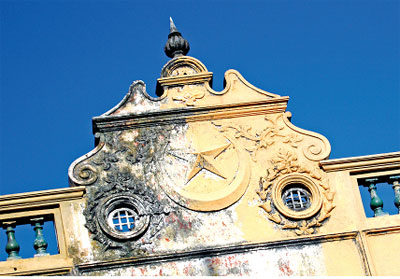
| Living History By: David Bowden |
||
Ipoh became famous for its rich tin deposits which were discovered in the Kinta River Valley in the late 19th century. Much of the countryside around Ipoh, especially near the adjoining town of Batu Gajah, is dotted with dunes and lakes, formed as a result of tin mining activities. A dominant feature of the Perak capital is the rugged, rounded limestone outcrops, often covered in a low-lying cloud that makes the landscape look like a scene from an old Chinese painting. On cool mornings the valleys are filled with cloud and mist above which rise the rounded limestone hills. The town is named after a type of tree called Ipoh (Antiaris toxicaria), which was once in abundance. For those interested in all things botanical, there is an Ipoh tree growing in the landscaped gardens in front of the railway station. As the scientific name alludes to, the plant produces toxic latex which the Orang Asli use to put on the tips of poisonous hunting darts. For many travellers, Ipoh is just another destination to detour around while travelling north on the North South Highway. However, making a detour to explore Ipoh’s historic old town, to appreciate the grandeur that was created by the discovery of tin, is a good way to spend a few hours. While maybe not everyone’s first choice for a weekend escape, the opportunity for an indulgent retreat in the city is providing an excellent reason for heading to Ipoh; just a two hour drive north of Kuala Lumpur. Historic Centre Many past Ipoh residents prospered from the discovery of tin and there are several streets lined with mansions that were once home to these people. While these are best viewed by car or taxi, the historic old town, centred on the railway station is the ideal location to start exploring Ipoh on foot. Ipoh Railway Station overlooks Medan Stesen Ipoh, a pleasant landscaped area and immediately beyond this is the all-white, colonial-styled Town Hall erected in 1917. Many of the older residents of Ipoh refer to the railway station as the Taj Mahal of Ipoh and while it does not attain the same grandeur as the Indian landmark, it is quite something for Ipoh. While the façade has been retained, the interior has been modernised to cater to the needs of present day rail travellers. The Royal Ipoh Club dating back to 1895 is located just past the High Court on Jalan Panglima Bukit Gantang Wahab. Facing Padang Ipoh, the green playing fields and the black-and-white Tudor-styled clubhouse look very much like Kuala Lumpur’s Royal Selangor Club. Both properties date from a similar era and members have reciprocal rights at each other’s club. Opposite the Royal Ipoh Club, on Jalan S. P. Seenivasagam stands the imposing three storey St Michael’s School, a historical building of national significance dating back to 1912. The three-storey school features decorated gables and wide-arched verandahs along the length of the main building. It was used during the Japanese occupation as the state’s administrative centre. Next door to the school is the ornately-decorated, Indian Moslem Sheik Adam Mosque. The FMS Bar and Restaurant is centrally located across the road from Padang Ipoh. FMS, short for ‘Federated Malay States’, looks much as it did when it was built in 1906 but its current two-toned blue finish makes it a little hard to miss. The swinging saloon doors at the entrance are reminiscent of an American wild west bar. FMS has been a part of the Ipoh dining entertainment scene for decades and was the bar of choice for miners and planters during its heyday. Built in Straits-eclectic architectural style to commemorate the foundation of the Federated Malay States, it has been carefully restored to maintain much of its original character. Take your time and stroll the streets looking at other nearby colonial buildings like that of the HSBC Bank. This historic part of Ipoh is a great movie set just waiting for location scouts to find it. And find it they did in 1992, when the area was used as a backdrop for the French movie, Indochine, starring movie legend Catherine Deneuve. Indochine went on to win a Oscar in Hollywood for costume design. For the producers, the historic buildings and streets closely resembled those of old Saigon and with some creative make-over, successfully replicated a lively Vietnamese scene. Other parts of the Kinta Valley were also used in the movie. Heritage Train Station Ipoh Train Station is a significant colonial building, known to some as the ‘Taj Mahal’ of the north. Built in 1915 this impressive structure combines Moghul architecture with some modern embellishments. Perak’s rail history dates back to 1894 when the railroad first started operating between Ipoh and Batu Gajah at the height of Malaya’s tin mining era. Stand at one end of the hotel café and imagine the station in its heyday in the 1920s when train travel was the main way of getting around the peninsula. The station was the major transport hub in the region and would have been buzzing with government officials who travelled outstation to attend meetings, or planters on their way down south to Kuala Lumpur to live it up a little. The tiled veranda is at least 4m wide and 100m long and has all the hallmarks of a pleasant place to linger. The hotel and the station have the potential to become a major tourist attraction with the increasing numbers of travellers interested in staying at or viewing heritage properties. The producers of the Hollywood movie, Anna and the King starring Jodie Foster and Chow Yun Fat appreciated the station’s attributes and used it as one of the locations for shooting the movie. Sadly the hotel and café have seen better days but maybe one day soon, both will benefit from anticipated renovations that could occur when the electrified rail link for Kuala Lumpur to Ipoh is completed in the not too distant future. Cool Caves At the base of the limestone outcrops, several large caves have been converted into Buddhist and Hindu shrines. One of them, named Sam Poh Tong, is among the region’s biggest cave temples and is located at the southern entrance to Ipoh. Plan a little time to stop here to inspect the 130-year-old temple’s colourful designs and shrines as well as to purchase sweet pomelos from one of the many stalls lining the main road. Indulgent Stay A few kilometres away in a residential part of Ipoh, Indulgence Restaurant and Living is making connoisseurs of tantalising food, wine and smart accommodation sit up and take notice. While many Malaysians are happy to travel to Ipoh for local delicacies like Ipoh sar hor fun (noodles) and ngah choy kai (chicken and bean sprouts) it would appear some diners love to visit Indulgence to sample dishes such as pistachio and rocket pesto tossed with pasta or, grilled scallops topped with vegetables. While this may be hard to believe, Ipoh is a city on the move and Indulgence is the pioneering force for creative dining. The restaurant is located on a sprawling plot of land so typical in what is known as Ipoh’s ‘Millionaire’s Row’. The Tudor-styled building was once a mansion for one of Ipoh’s wealthy but it has been recently modified by the inspiration behind Indulgence, Julie Song. Not content to just serve fine food and wine to her guests, Julie recently opened a boutique hotel above the restaurant. The six themed rooms are stunning in their decor, comfort and style. Guests can stay in a suite with an English country ambience including a four-poster bed, plush lounges and paintings but with contemporary features such as a rainforest head shower, minibar fridge and flat-screen plasma television. While the experience does not come cheaply, it will leave lasting memories with all those who indulge. The other themed suite is Moroccan in inspiration while the four remaining deluxe rooms are – contemporary, Chinoiserie, Thai and Italian in design. Those who stay or dine at Indulgence have to constantly remind themselves that they are actually situated in Ipoh in the middle of Malaysia. Indulgence provides another excellent reason for spending a little extended time in the historic Kinta Valley, exploring the delights that once made it famous. |
||
|