By Gigi Ivanna
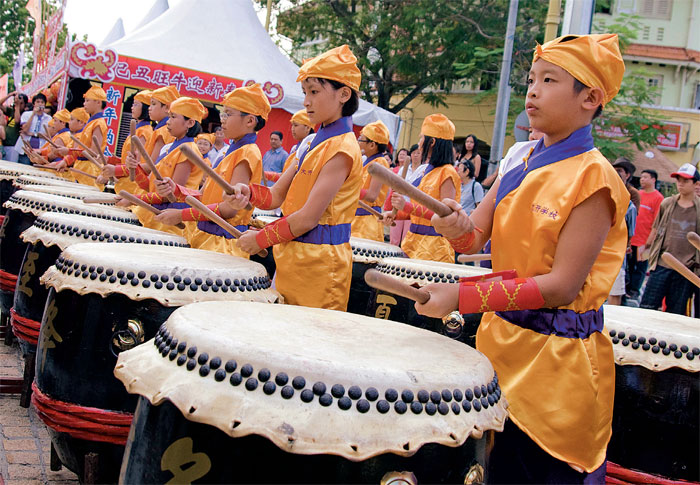
IT IS THAT TIME OF YEAR AGAIN WHERE COLOURS, FESTIVITIES AND GOOD FOOD ARE
ABUNDANT. GIGI IVANNA TAKES A LOOK AT HOW CHINESE NEW YEAR IS CELEBRATED BY THE PEOPLE OF MALAYSIA.
In late January or early February
Malaysia’s capital city becomes
unusually quiet. It’s because it’s
Chinese New Year and a large
number of Kuala Lumpur’s
residents balik kampung (return to their
hometowns) to celebrate the festivities
with their family.
Chinese communities all over the world
usher in the New Year on Chinese New
Year, the first day of the new moon in the
Chinese calendar. It is the most important
celebration of the year where family
reunions, get-togethers with friends and
families and gathering luck and prosperity
take centre stage.
Celebrations end 15 days later on Chap
Goh Meh, the last day of the full moon. In
Malaysia, Chinese New Year is celebrated
from 3 – 17 February this year with the
first two days gazetted as public holidays.
THE NIGHT BEFORE
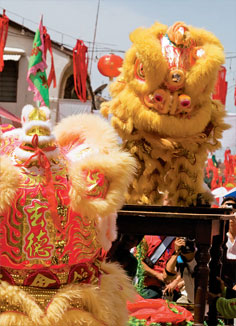
Although proper celebrations begin on the first day, the night before is probably more important as family members from near and far return home for the reunion dinner to rekindle family ties and enjoy an extensive spread. Traditional dishes have a symbolic meanings such as noodles for longevity, fish for abundance and prosperity, whole chicken for happiness and marriage and duck for from reunion dinners as it symbolises abundance for the family – they will never go hungry. Another must-have on the Malaysian table is the yee sang, a dish of raw fish mixed with shredded vegetables and a variety of sauces and condiments. Everyone mixes the ingredients together by tossing them into the air with chopsticks.The higher the toss, the more abundant the fortune.This tradition is mainly practiced in Malaysia and Singapore, but Hong Kong and parts of mainland China are starting to introduce it as well. Legend has it that a fearsome mythological creature known as Nian terrorised China. To ward off the beast, people pasted red paper and set off firecrackers throughout the night. Unfortunately, firecrackers and fireworks are prohibited in Malaysia so improvisations are made with the loud sounds of mahjong playing, singing, merry making, recorded sounds of exploding firecrackers and the occasional illegal real ones. HAPPY NEW YEAR! The first day of Chinese New Year begins bright and early in the Chinese household. New clothes will be worn that day, especially red or bright colours to represent luck. Greetings of “Gong Xi Fa Cai” will reverberate throughout the house where the younger ones scramble to address the older ones. They have an incentive you see, as it is customary for married individuals to give out ang pows (red packets containing money) to children and unmarried adults. If they are Buddhists, ceremonial candles will be lit, incense burnt and offerings placed at the home altars. Some would also go to the temples to seek blessings. The first day is usually reserved for visiting family members but as the modern urban family gets smaller, some families have opened their home to close friends as well. Visitors will bring gifts as a sign of respect with the most common ones being mandarin oranges that symbolise wealth and prosperity. It is customary to visit the oldest family member before the younger ones. What makes the celebrations unique in Malaysia are the open houses held throughout the 15 days where anybody of any race, faith and religion can visit. It is then that you will see the true spirit of multi-cultural unity that Malaysia is proudly famous for. The most exciting part of Chinese New Year that are the many lion dances performed by troupes all over Malaysia. Lions are believed to bring good fortune and ward off evil. According to legend, the lion was the only animal who succeeded in wounding the beast Nian. Lion dances and occasional dragon dances are performed in houses, businesses and commercial premises in a spectacular visual feast of costumes, drums and acrobatic acts.These dances have become so popular that professional competitions are held internationally to crown the world’s best lion dance troupe. BELIEFS AND TRADITIONS
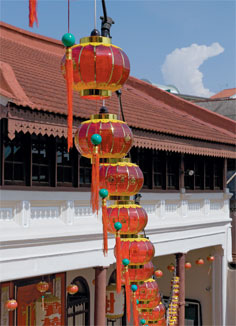
For example, every Chinese family cleans the entire house on New Year’s Eve as it is considered bad luck to sweep or clean the house on the first day of the New Year. They would not want to sweep their fortunes away! The same principle applies to the washing of hair on the first day. Foul language, scolding and crying are to be avoided on the first day as is the use of sharp instruments such as knives and scissors. Care must be taken not to break any dishes or things. If you do, the broken pieces must be kept and only thrown out on the following day. If there has been a recent death in your family, you are encouraged not to go visiting as you may bring misfortune to your hosts’ homes. Chinese businesses usually close during the first few days, only opening again on the fifth day. All business debts must be settled before the New Year and nothing should be lent on the first day as anyone who does so will be lending the entire year. THE LAST DAY Chinese New Year festivities come to a spectacular end on Chap Goh Meh, simply meaning the 15th night in Hokkein (one of Malaysia’s many Chinese dialects). Just like the first day, the last day is celebrated with great fanfare. Houses are brightly decorated with lights and red lanterns. Offerings to the Gods will be made while incense and joss sticks are lit. Devotees head to the temple to seek blessings for the rest of the year. In Malaysia, the state of Penang is the best place to go to witness the Chap Goh Meh celebrations. It coincides with the Chinese Valentine’s Day, and the highlight of the evening is when single women and girls throw oranges into the sea in hopes of finding a good husband. This tradition originated from Penang in the late 19th century and is celebrated along Penang’s Esplanade every year. The Chinese New Year period is an exciting time to visit Malaysia. If you make Chinese friends while you are here, visit them during this time as Chinese NewYear is best celebrated in the Malaysian home. fidelity. It’s always good to have leftovers. |
  |
 |