By Aida Ahmad
My second trip to the Land Below the Wind this took me off the beaten track down back roads through the district of Kudat, which spreads across the two arms that enclose the deep inlet of Marudu Bay. In Sabah alone, there are 32 ethnic groups classified as indigenous. Kudat is home to Sabah’s most traditional people, the Rungus. Impressive longhouses and skilfully made handicrafts can still be seen around this district, which also boasts some of the finest beaches in all of Sabah. This trip did not involve any luxury hotel accommodation. Instead it was solely to experience the Misompuru Homestay programme and the state’s Tadau Kaamatan Harvest festival in Kudat.
The festival is a month-long celebration held on 30 and 31 May, a public holiday for the state of Sabah. From Kota Kinabalu, it takes approximately three hours by road. After making a pit stop for lunch at the old town in KK where we stocked up on necessities (i.e. water, munchies) we hopped on the bus along with representatives from Tourism Malaysia, Tourism Sabah and various homestay programmes from the different states. In KK, most people drive 4WDs because of the tough road conditions so hiring one of those on your next trip might come in handy.
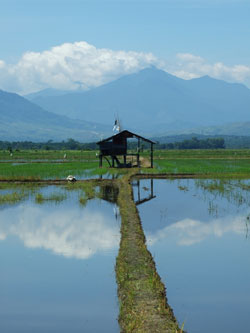
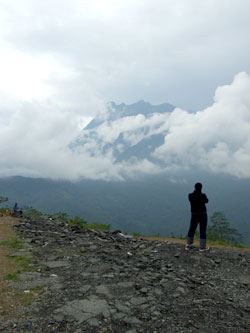
The road leading north to Kudat passes through the district of Kota Belud, renowned for its colourful Bajau horsemen. The town of Kota Belud is synonymous with its Sunday open market or tamu, which is one of the most exciting in Sabah. Beyond Kota Belud the road cuts across the scenic Tempasuk plain, irrigated by rivers rushing down from the granite flanks of Mount Kinabalu. Viewed from the west, the mountain is at its most dramatic, rising up almost directly from the plain, with paddy fields and water buffaloes dotting the tranquil landscape.
Almost all road trips involve some sort of detour. We were told by one of the locals that a must visit for any newcomer to Sabah would be the Tip of Borneo. The tip of Borneo is in Tanjung Simpang Mengayau, also known as Tanjung Sampang Mangazou in the Rungus language. “Tanjung” means tip, “Sampang” – junction and “Mangazou” means battle. According to Rungus folklore, this was the site of a fierce battle fought by their forefathers defending Rungus territory against invading enemies. The fleet of Ferdinand Magellan on its famous voyage to circumnavigate the globe, was said to have stopped here for 42 days to repair their ships. Photography enthusiasts will find this fascinating as the view of where the Sulu Sea meets the South China Sea is absolutely breathtaking.
We were divided into groups and assigned to different homes in a village called Kampung Minyak in Kudat. After a brief introduction about the programme and the itinerary for the next few days, I was taken to my foster family which comprised Toyib and his wife Diana. Talk about hospitality… supper was served and ready on the table although it was almost 11pm when we arrived. Freshly cooked rice, curry and vegetables filled the table out on the porch. Granted we were ravenous since the last proper meal we had was lunch. Just to reiterate, this is truly backpacker style accommodation with no-frills. However, what it lacks in amenities it makes up for in the warm and gracious hospitality provided by the natives. This is by far the best way to experience living with the locals and see for yourself the abundance of culture and heritage that is still very much part and parcel of the community.
The next day saw us heading to the Kampung Minyak school field where the festivities for the Tadau Kaamatan Harvest celebration were being held. Sabah’s most notable festival brings together the Muslim and Christian Kadazandusuns and Rungus tribes who all celebrate Tadau Kaamatan as a symbol of thanksgiving for a bountiful harvest. While waiting for YB Sarapin Magana, the political secretary to the Chief Minister of Sabah, to officiate the celebration a few of the native Rungus people took us for a small road trip across town – to the Kampung Minyak oil wells. Frankie, our guide, says that hundreds of years ago this was a Japanese burial ground and that the oil, consisting of petroleum, had and still has healing properties. “It is a custom to gently dip your finger in the oil and swipe it across your forehead for good luck when you leave the wells,” adds Frankie.
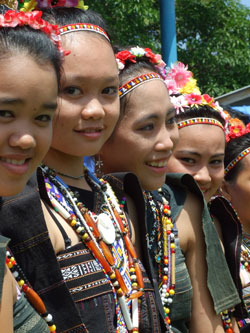
The Tadau Kaamatan is unique in a way as well as there is even a beauty pageant called Unduk Ngadau to search for a Harvest Queen. The contestants aged between 15 and 23 were all dolled up in their best traditional Rungus costumes and showed their grace and wit while they answered a few simple questions about the festival and the Rungus tribe.
The next day saw us bidding farewell to our foster families in Kudat as we were heading off further south to Kundasang to experience the Walai Tokou homestay. The majority of people here are from the Dusun tribe. Translated in the local Dusun language, “Walai” means house while “Tokou” means to share “Our House”. My foster father this time is Koh Adie Watiman, a father of six children who owns a vegetable business with his wife. Accomodation over here I should say is a bit more “comfortable” – as we were told the natives are mostly farm owners and businessmen so they are in fact more well off. The weather is nippy though – similar to what one would experience in Cameron Highlands. During the day, it’s between 16 to 17 degrees Celsius while at night it can dip to 14. We were given a warm welcome by the local Dusun women who were decked out in their dazzling traditional costumes of black and gold.
Night time saw us enjoying dinner and the tunes of the local Dusun band – aptly named Suara Buluh Perindu Kinabalu, which comprised teenage boys from ages eight to 14. The entertainment went on until late so everyone was free to stay back or adjourn to their respective homes. I on the other hand was cajoled into taking a drive to a nearby stall selling hot and spicy honey satay. It was a treat indeed for a chilly Sunday night.
I could elaborate for pages and pages about how there is so much to see in these small towns in Sabah but the best thing would be for you to experience it for yourself. The best part about it is it won’t cost you much.
To experience the homestay programmes in Sabah, visit www.sabah-homestay.org.com or www.misompuruhomestay.com or email Jeffrey Yahya @ Cobra at cobramisompuru@hotmail.com or jyrcobra@hotmail.com.
  |
 |