 Mid-Autumn
Merriment
Mid-Autumn
MerrimentBy Manveen Maan
THE SEASONS MAY NEVER REALLY VARY THAT MUCH IN MALAYSIA, AND STRICTLY SPEAKING, IT'S NOT AUTUMN YET, BUT THE MID-AUTUMN FESTIVAL STILL HANGS ON TO ITS NAME IN THIS TROPICAL PARADISE. MANVEEN MAAN TAKES A CLOSER LOOK AT THE HISTORY AND CUSTOMS BEHIND THIS ANCIENT CHINESE FESTIVAL.
Falling on the 15th day of the 8th month according to the Chinese Lunar Calendar, the Mid- Autumn Festival is one that is waited on with much anticipation by all Malaysians. It takes its name from the timing of the festival - it is always celebrated in the middle of the autumn season - and is also known as the Moon Festival, due to it occurring at a time of the year when the moon is roundest. On this day, family members gather to appreciate the glowing full moon, indulge in delicious mooncakes at night, ask for good wishes toward their homes and think of family members who live far away.
LEGEND HAS IT
 The Mid-Autumn Festival has a long history. In ancient China, emperors followed the rite of offering sacrifices to the sun in spring and to the moon in autumn. In the following years, aristocrats and literary figures helped expand the ceremony to common people. By the Tang Dynasty (618-907), the Mid-Autumn Festival had been fixed, which saw grander and more opulent celebrations in the subsequent Song Dynasty (960-1279). In the Ming (1368-1644) and Qing (1644-1911) dynasties, it grew to be a major festival of China, and has carried through to other countries with Chinese immigrants today.
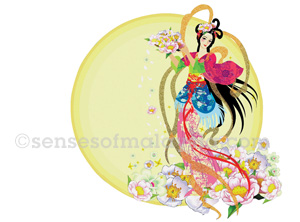
Like most Asian celebrations, there is an epic tale behind the festival. The legend of Chang E is the most widely accepted story regarding the origins of the Mid- Autumn Festival. It is said that in ancient times, ten suns existed and the extreme heat made everyone's lives very difficult.
A hero called Hou Yi took matters into his own hands and shot down nine of the ten sweltering suns. He also ordered the last sun to rise and set according to time. For this reason, he was respected and loved by many, and people came from near and far to meet this amazing man. One of these people was a man called Peng Meng.
In time, Hou Yi married a beautiful and kind woman named Chang E. One day, Hou Yi came upon Wangmu, the Queen of the Heavens, who presented him with an elixir which, when consumed, would cause him to ascend immediately to heaven and become a celestial being.
Instead of drinking the potion himself, Hou Yi took it home and presented it to his lovely wife, Chang E for safekeeping.
Unbeknownst to Hou Yi, the devious Peng Meng secretly watched this entire encounter and plotted his next move. A few days later, while Hou Yi was out hunting, Peng Meng rushed into their home and demanded that Chang E hand over the elixir. Knowing that she could not overpower the armed Peng Meng, Chang E retrieved the elixir and swallowed it immediately. The moment she drank it, she flew out of the window and up into the sky. Chang E's great love for her husband drew her towards the Moon, the nearest heavenly body to earth.
Consumed by memories of his wife, the grief-stricken Hou Yi set up an incense table in the back garden and filled it with his beloved wife's favourite treats, including the sweetmeats and fresh fruits Chang E enjoyed most. Hou Yi then held a memorial ceremony for Chang E and presented the food as a sacrifice for her life on earth. When people heard that Chang E had been turned into a celestial being, they too arranged the for incense tables to be placed in the moonlight.
One after another, they prayed to the kind-hearted Chang E for good fortune and peace. From then on, the custom of worshipping the moon spread amongst the people, eventually becoming a custom followed by many.
CUSTOMS AND RITUALS
Different customs have evolved in different areas regarding this traditional festival. The most significant customs (and the most common) are to express gratitude and offer sacrifices to the round, bright moon and to eat mooncakes. Other activities like dragon dancing are also considered highly important.
Since ancient times, Chinese emperors have offered sacrifices to the sun in the spring, and the moon in autumn. However, appreciating the moon became more popular in the Tang (618-907) and Song Dynasties (960-1279). Various famous poems, paying homage to the moon on the night of the festival itself, were written and popularised during these periods. The Ming Dynasty (1368-1644), saw the creation of the Moon Altar, built for the purpose of honouring the moon during the festival.
Mooncakes also played a major role in liberating the Yuan Dynasty (1206-1341) from the oppressive Mongols in the 14th century. Despite a prohibition against large gatherings, Zhu Yuan Zhang (The Hongwu Emperor) was able to instigate a rebellion by placing secret messages in mooncakes. The rebellion took place during the Mid-Autumn Festival and henceforth, the festival and the eating of mooncakes took on a different meaning.
Today's celebrations see sacrificial rites being replaced by a simple appreciation of the moon. Family members usually sit around a table, and reminisce about happier times with loved ones. On this night, many houses are illuminated with lanterns, and feasts and dance parties are held on a grand scale.
Thirteen types of offerings to the moon (signifying the number of months in a full lunar year) are prepared by female
members of the family, with each offering having its own significance. Cosmetics are also placed on the altar in the belief that they will beautify the user.
The month of the festival is also popular for family gatherings with "moon viewing" parties, or shang yue, and the tradition of Tam Tang Lon, or lantern carrying. The "galloping horse" lantern (zou ma deng) is a popular choice, for people lighting up homes and temples with beautifully arranged lanterns.
MOONCAKE MANIA
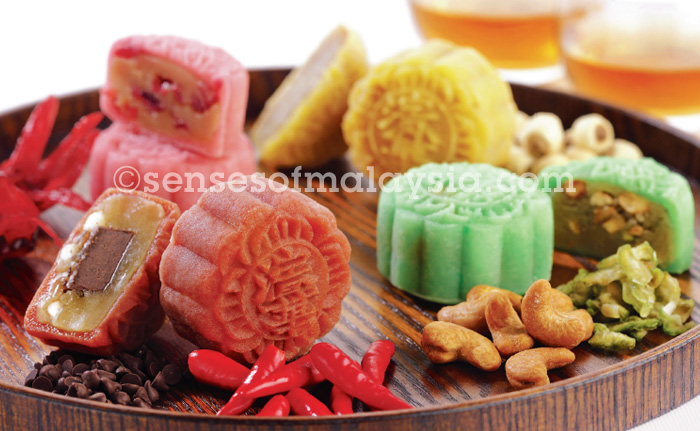
As with every Malaysian holiday, the Mid- Autumn Festival has its own special food – the mooncake. The mooncake is a kind of cookie-like pastry, stuffed with various fillings. The surface of the mooncake is printed with different artistic patterns depicting the story of Chang E flying to the moon.
Mooncakes come in various flavours which change according to the region, but the most common ones are nuts, sugar, sesame, and egg yolk. More modern flavours, designed to excite the more international palate, include mocha milk tea, jade custard, raspberry, and even savoury selections with chicken bits or shrimp sambal.
Although they are fairly pricey by local standards (about RM10 per piece), mooncakes are a popular choice even with those who are not celebrating the festival. Elaborately designed, colourful boxes are often given to friends and colleagues as part of the celebration's "well-wishes" gesture.
Today, the mooncake has become an indispensable part of the celebrations, along with the gathering of family members. In fact, the round shape of the mooncake itself symbolises the reunion of a family.
This year's Mid-Autumn Festival falls on September 19 and lasts two whole days. Not quite enough time to head to the moon and back, but enough to enjoy a feast of delicious mooncakes with the entire family.


