 Malaysia Day - How the East was Won
By Manveen Maan
MANY SCRATCH THEIR HEADS IN CONFUSION AT THE DIFFERENCE BETWEEN MERDEKA DAY AND MALAYSIA DAY, BUT MANVEEN MAAN
HAS DONE HER RESEARCH. AS MALAYSIA DAY APPROACHES THIS SEPTEMBER, NOW IS A GOOD TIME TO LEARN ABOUT ITS SIGNIFICANCE, ESPECIALLY IN RELATION TO THE EASTERN PORTION OF THE COUNTRY.
The first, Hari Merdeka or Independence Day, is celebrated on 31 August every year, while the second one, Malaysia Day, falls on 16 September. The recently created holiday of Malaysia Day has much significance for East Malaysia. For years, Independence Day was the only one celebrated in Peninsular Malaysia (or Malaya, as it was known then), commemorating the nation's independence from British colonial rule in 1957. A significant moment in the country's history no doubt, but a celebration day that fails to include the moment that Sabah, Sarawak, Borneo, and Singapore joined Malaya to form the Federation of Malaysia and give birth to the country we live in today. This is Malaysia Day; the day in which Borneo was officially welcomed into the fold.
SABAH'S BEGINNINGS
 East Malaysia has a rich history that dates back to the days of the Brunei Sultanate. Sabah, in particular, was the subject of many disputes, with both the Philippines and Indonesia wanting to stake claim over the petroleum-rich state. Under the rule of the British from 1888 onwards, Sabah also endured a particularly brutal few years during the Japanese occupation from 1942 to 1945. The infamous Sandakan Death March, a series of forced marches from Sandakan to Ranau, resulted in the demise of thousands of servicemen and is widely considered to be one of the worst atrocities suffered during the Second World War.
In 1946 Sabah became a British Crown Colony, before joining the Federation of Malaysia 17 years later. Following the influx of Filipino refugees in the 1970s, disputes over Sabah's right to some of its islands, raised by neighbouring countries, prompted the International Court of Justice to declare the Indonesian-claimed islands of Sipadan and Ligitan to be officially part of Sabah and Malaysia.
SARAWAK'S EARLY LEADERS
 Similarly, Sarawak started off under the rule of the Brunei Sultan, although few can tell the story of Sarawak without mentioning the famous Brooke dynasty. James Brooke was appointed Rajah of Sarawak by the Sultan of Brunei in 1842 and ruled the territory across the western regions of Sarawak until his death in 1868. Established in 1841, the capital city of Kuching flourished under his rule, and continued to do so for
the three generations that followed. Brooke was succeeded by his nephew, Charles Anthony Johnson Brooke, who was Rajah until his death in 1917 when his son Charles Vyner Brooke shared the Rajah duties with his brother, Betram Brooke.
Similarly, Sarawak started off under the rule of the Brunei Sultan, although few can tell the story of Sarawak without mentioning the famous Brooke dynasty. James Brooke was appointed Rajah of Sarawak by the Sultan of Brunei in 1842 and ruled the territory across the western regions of Sarawak until his death in 1868. Established in 1841, the capital city of Kuching flourished under his rule, and continued to do so for
the three generations that followed. Brooke was succeeded by his nephew, Charles Anthony Johnson Brooke, who was Rajah until his death in 1917 when his son Charles Vyner Brooke shared the Rajah duties with his brother, Betram Brooke.
The Brooke dynasty ruled Sarawak for a hundred years and became famous as the "White Rajahs"; a status within the British Empire similar to that of the rulers of Indian states. Under their influence, the Sarawakian territories were greatly enlarged, mostly at the expense of areas nominally under the control of the
Brunei Sultanate.
Unlike many other foreign rulers, the Brooke dynasty was known for its policy of authoritarianism in order to safeguard the indigenous population against exploitation. The Brookes governed with the help of the Malay Muslim population and enlisted the Ibans and other Dayak (indigenous people) as a contingent militia.
The White Rajahs also encouraged the immigration of Chinese merchants into Sarawak, although they prohibited the new arrivals from settling outside of towns to curtail their impact on the Dayak way of life.
INDIGENOUS PEOPLE
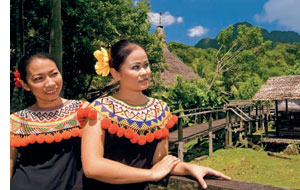
 Thanks, in part, to the practice of the White Rajahs, the indigenous people of Malaysia make up approximately 13% of the population today, with almost all of this percentage living in East Malaysia. The Orang Asli ("original people" in Malay) is the official title of the indigenous people of the country, who can be divided into three categories - the Semang, generally confined to the northern portion of Borneo; Senoi, mainly located in the central part of the region; and Proto-Malay people found in the southern region.
Historically, the Orang Asli kept to themselves, but they became more well-known to the public after being targeted by Christian missionaries and anthropological research. The Orang Asli are traditionally animists, believing in the presence of spirits in various objects rather than in monotheistic religions. Sadly, the effects of modernity have changed all of this, and much of the population today embraces religions such as Islam and Christianity.
The Orang Asli played a vital role in the fight for national security during the Malayan Emergency (1948-1960), helping the Malaysian army defeat communist insurgents. As an appreciation for the support received, the development of the well-being and protection of the Orang Asli became the primary objective of the government after independence was secured. A policy was adopted in 1961 to integrate the Orang Asli into the wider Malaysian society, enabling the general public to have a glimpse of the lives of people who had previously lived in remote forest areas and whose ways were unknown to many.
EAST AND WEST DIVIDE
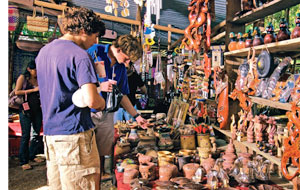 For many years, Peninsular and East Malaysia were perceived as quite separate entities. After all, the South China Sea divides the two land masses, historically making it both difficult and time consuming to travel between the two parts of the nation. However, affordable travel options and opportunities in the urban jungle of Kuala Lumpur have provided more interaction between the people of both the East and West of the country, allowing for an inter- change of knowledge and encouraging awareness of the socio- political, economic, and cultural realities of both societies.
With these developments in mind, it is easy to understand how times have changed. Ironically, it is globalisation that has forged closer ties between East and West Malaysia, allowing for the creation of a whole Malaysian identity.
Recognising and embracing the importance of the unique religious, cultural and linguistic diversities of the people of East Malaysia has changed the traditional outlook of the nation. It is with the commemoration of Malaysia Day that the nation is able to truly celebrate and appreciate the beauty of the more multi-cultural and diverse country that it has become since Sabah and Sarawak joined the Peninsular to create a unified nation.
Malaysia Day is celebrated on 16 September each year.


