By David Bowden
Multicultural Malaysia in all its forms from language, dance, festivals, food, religion, music and fashion creates an exciting and vibrant environment for visitors. While the capital Kuala Lumpur only dates back some 150 years ago there are many contrasting architectural styles that give the impression of a much older city. This juxtaposition of the old and the new has created several interesting places to visit and fascinating areas to photograph in certain areas of the city. The historic precinct centred on the Sultan Abdul Samad Building one of the best areas to start. David Bowden reveals his ‘ten best of Kuala Lumpur’; an Asian city that’s going places.
Colonial KL
Various streetscapes showcase the city’s eclectic architectural styles. A walk around Merdeka Square in front of the cricket fields or padang of the Royal Selangor Club (RSC) offers the best architectural variety. Ignore supposedly the world’s tallest flagpole and concentrate on the mock-Tudor styling of the RSC, the ornate Sultan Abdul Samad Building as well as the contrasting contemporary Islamic architecture of the 35-storey Dayabumi Complex. All buildings are impressive at any time of the day but especially at night when fairy lights on some turn the street into a colourful sight. The padang is where Malaysian independence was declared in 1957.
Other landmark buildings in the vicinity include the Masjid Jamek Mosque at the confluence of the Gombak and Klang Rivers, the old Railway Station and the National Mosque. Masjid Jamek is where the settlement of Kuala Lumpur started in 1857 when tin was discovered in the rivers. Not only is it the city’s oldest surviving mosque, it’s arguably the most beautiful. Interestingly enough, despite the architecture being distinctly Mogul, it was designed by English architect, A.B. Hubbock.
The former main train station is another marvellous example of Hubbock’s design and while its main function has been taken over by Sentral Station, trains still stop here and it’s the best way to visit. Catch a KTM train from Sentrul and take a look around the station and inside the hotel here and think about the tales that could be told if its walls could talk.
To learn more about the city’s heritage drop by Badan Warisan (Malaysia’s National Trust) located on Jalan Conlay (opposite the Royale Chulan Kuala Lumpur Hotel). The restored wooden Kedah home named Rumah Penghulu Abu Seman is located in the grounds here. Contact: Badan Warisan, T: +603 2144-9273, www.badan-warisan.org.my
Cultural KL
Opened in 1999, the Islamic Arts Museum of Malaysia (IAMM) has the region’s largest collection of Islamic art. Located just near KL’s Lake Garden greenbelt the collection contains over 8,000 artefacts as well as an exceptional library for research purposes. Displays range from intricate jewellery to various scale models of famous Islamic buildings including the Masjid al-Haram in Mecca. In the Woodwork Gallery there are elaborately-crafted wooden artefacts some of which are decorated with precious ivory and mother-of-pearl inlay. The Jewellery Gallery has many beautiful pieces including Iranian golden anklets and several items adorned with precious gemstones.
The museum places an emphasis upon India, China and South East Asia but the 12 galleries are displayed according to artistic medium rather than geographical location. The building is contemporary in design with Islamic features and detail with several turquoise domes on the roof and corresponding inverted domes being featured on the interior. Artisans from Iran and Uzbekistan created an ambience that’s best described as seamless continuity of light and space.
The Museum Restaurant serves Middle Eastern cuisine but for lunch only and the museum shop sells an excellent range of souvenirs and books. The museum is open daily from 10am-6pm (the restaurant is closed on Monday). There is a modest entry fee and on a hot day, the ultra-cooled interior here is a welcomed respite from the tropical heat. Contact: T: +603 2274-2020, www.iamm.org.my
Adventure in the City
KL is probably the only city in the world that can stake claim to supporting a stand of rainforest in its central downtown district. Bukit Nanas Forest Reserve located at the base of the 420m high Menara KL tower is an 11 hectare forest reserve with a couple of well sign-posted walking trails to explore. The reserve was gazetted in 1906 and it has basically remained untouched since the first seed germinated. Much of Malaysia was once covered in rainforest and this small remnant stand enables city-based dwellers and travellers the opportunity to experience life in the rainforest without stepping out of the big smoke. While it’s all a bit tame compared to the real thing observant visitors can see lizards, monkeys, squirrels and lots of birds living amongst buttressed rainforest emergents.
There are various other recreational facilities including an outdoor gymnasium and a playground for the kids. Toilets, benches and tables are available for those who want to relax and picnic here. Those staying in nearby hotels may want to consider exercising in the rainforest or the outdoor gym. The main gate is located on Jalan Puncak but there are several entrances. Learn more about the rainforest by inspecting the Visitors’ Information Centre open from 9am to 5pm (the park opens from 8am to 6pm).
Visiting both Menara KL and Bukit Nanas is a good idea for those looking for a little rainforest adventure. Visit the tower first to get an idea of where the rainforest trails lead through the forest reserve. Show your tower ticket and you can participate in a free guided walk through parts of the reserve. These guided walks depart at 11am, 12.30pm, 2.30pm and 4.30pm. Contact: T: +603 2020-5448, www.nature-escapes-kuala-lumpur.com
KL From On High
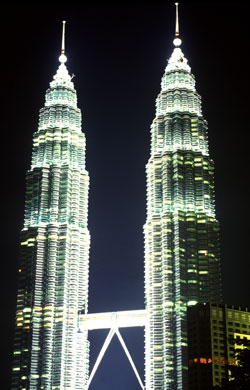
While the 88-storey PETRONAS Twin Towers are the world’s tallest twin towers (Burj Dubai should be the tallest building in the world by the time you read this), visitors can only gain access to the skybridge that links them at the 41st and 42nd floors. From here views of the surrounding parklands are superb but only 1,700 visitors a day can enjoy the experience with the queue for free tickets starting as early as 5am. Most people don’t bother and a good alternative enables you to get a commanding view and a good night’s sleep. The more accessible and enjoyable option is the SkyBar on the 33rd floor of Traders Hotel located on the other side of the park within the KLCC complex.
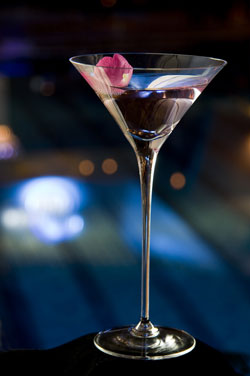
This open-sided bar has impressive and uninterrupted views of the twin towers so plan to arrive around 6.45pm just before the tower lights are turned on against the purple sky of dusk. If the towers aren’t impressive enough they certainly will be as they light up like Christmas trees before your very eyes. SkyBar is one of the city’s coolest bars not only because of the breeze whistling through the place but also because of the ambience and music. The beautiful people don’t arrive until late in the evening so no one will really notice you admiring, photographing and generally looking like a gawky tourist early in the evening. It’s a good idea to watch where you walk here as the hotel’s pool is the centrepiece of the bar. A poolside lounge with front row seats to the twin towers is best reserved by making an early booking. The visual appreciation of the twin towers is always enhanced by one of SkyBar’s signature lemongrass martinis. Contact: T: +603 2332-9888, www.shangri-la.com
KL at Night
KL has several bar streets that are worth researching if you are interested in appreciating the merits of Malaysian beers and beverages. Booze is readily available in many parts of the city and one of the best places to start is Changkat Bukit Bintang. This compact downtown street is crammed with several small bars, cafés and restaurants. Arrive at happy hour to enjoy value-for-money beverages and, later in the evening move onto beer towers holding a couple of litres of the amber fluid. The beers they drink around here are Anchor, Tiger, Heineken and Carlsberg (Anchor being the only true Malaysian beer) with excellent support from Irish imports like Guinness and Kilkenny.
Bars and restaurants come and go but last time SoM researched Changkat Bukit Bintang the following establishments captured the attention of our parched palates. The bars that are worthy investigating (are there any that aren’t?) include The Green Man, The Social, Finnegan’s and Havana with restaurants like Frangipani, Flam’s, Bermuda and Onion, El Cerdo, El Cerditi, La Vaca and, the Magnificent Fish and Chip Shop being consistently good and popular. Many have open-air courtyards onto the street and these are the power tables of choice for people watching.
One of the big downsides of the area is its off-street parking so it might be best to park and walk a little distance. Some of the offices along Jalan Raja Chulan are within 250m of the action.
There are more bar and club streets at Heritage Row and around the Jalan P Ramlee/Jalan Sultan Ismail intersection with the Beach Club having attained legendary status throughout the region for its exuberant nightlife and exceptionally friendly girls. Contact: www.timeoutkl.com
Hot Cuisine
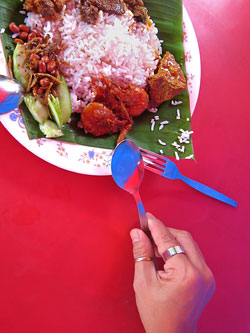
Malaysians are passionate about food – they mostly live to eat. Forget talking to the local residents about the weather; food and eating are the main topics of conversation. The food is superb, cheap and varied with the main styles being Malay, Indian, Chinese and Western. Eat in hawker stalls or fine dining restaurants depending upon your inclination and budget.
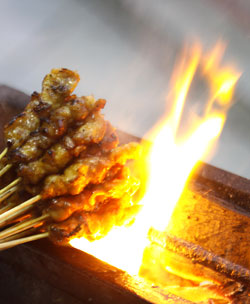
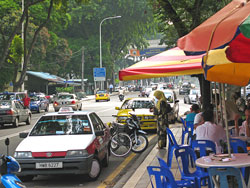
Don’t miss food streets such as Jalan Alor (hawker food), Changkat Bukit Bintang (bars and international restaurants), Tengkat Tong Shin (regional and international cuisines) and the ever-popular Chinatown. Jalan Alor’s appreciation is very much dependent upon the prevailing weather as most stalls open onto the ever-busy street. It’s best to seek alternate dining options when it rains but when it’s fine, there’s nothing better than enjoying a variety of delicious dishes under the stars. All Malaysia’s popular dishes are cooked on the street before your eyes with the aroma of barbecued fish (ikan bakar) and satay filling the air. Look out for hawkers selling fresh durian when it’s in season.
For that special occasion make a reservation at city restaurants such as Sao Nam, Bijan, Tamarind Hill, Gu Yue Tien, Senses, Taj, The Loaf, Sage, Frangipani, Gobo Upstairs, Toh Lee and Prime. Sunday is a big family day in KL and a popular time to dine together. For that special occasion, book a table for the Sunday free-flow Veuve Cliquot brunch at Prego in The Westin Kuala Lumpur for premium bubbly and the tastiest Italian.
Haute Stuff and Choo’s Shoes
In a similar vein to eating, Malaysians love to shop especially as the range is extensive with very competitive prices. Noted Malaysian shoe designer Jimmy Choo hails from Penang but attained international success soon after opening his first shoe boutique in London in 1986.
Zang Toi is another Malaysian designer known for trademarks of vibrant colours, timeless styling and opulent fabrics. He likes to incorporate Malaysian elements in his designs with orchids and batik being common links to his birthplace in Kelantan. His designs are available around the world and Zang Toi boutiques and cafés in Malaysia. Other Malaysian designers to seek out include Bernard Chandran, Eric Choong, Bill Keith, Melinda Looi, Edmund Ser, Carven Ong, Jonathan Cheng, Michael Ong, Edmund Ooi, Orson Liyu, Daniel Chong, Khoon Hooi, Andy Sulaiman, William Liew, Daniel Cho and Iskandar Rahman.
Shopping options range from cheap stalls and rabbit-warren like malls to the prestigious and spacious downtown retail pleasure domes. International designer brands are anchor tenants in almost all shopping malls and many people aspire to wear the most contemporary fashions from the world’s leading trend-setting designers.
Suria KLCC at the base of the twin towers is arguably the nation’s most impressive conventional shopping centre but this is well supported by Lot 10, the Pavilion and Starhill Gallery. Busy markets in Chinatown, Little India and Chow Kit provide local flavour.
For something Malaysian, seek out gifts of pewter or batik. Pewter is an alloy of tin which is crafted into decorative ornaments and jewellery. Brands such as Royal Selangor Pewter and Tumasek Pewter have both carved out national and international markets for their creative and contemporary designs. Intricately-patterned Malaysian batiks are one of the locally-produced textiles keenly sought after by tourists as well as the local population.
Nocturnal Shopping
The pasar malam or night markets are an essential part of the Malaysian cultural landscape. Each city and town has evening markets in various locations on specific nights (in the cities, these markets relocate each evening so it’s best to ask your hotel concierge where the markets are located on specific nights). Pasar tani is a farmers’ market with a similar atmosphere but generally conducted in smaller towns in the morning.
Hawkers and traders set up their stalls just before sunset (although this tends to start earlier and earlier as many jockey for the best positions) and hawk fresh fruit, vegetables, meats and freshly-cooked snacks for eating in the market or for take-home consumption. Prices are usually cheaper than elsewhere as the overheads are low.
The markets are a great leveller too as people from all backgrounds come here to shop. It’s always crowded as people pull little trolleys behind them laden with goodies. If you’re there to photograph the proceedings be prepared to be quick and don’t be afraid if you get jostled – it’s never a good place to be between hungry Malaysians and food.
Sunday’s night market in suburban Bangsar is vibrant and compact spreading basically along just one street with a little bit of overflow. There are bars and restaurants lining the perimeter for those who would rather watch than participate.
Creamed Tea with the Queen
The Queen once stayed at the stately Carcosa Seri Negara. Sadly, lots of people once stayed at the Carcosa and by the time you read this, the Carcosa will have closed its doors (31.12.09). So why mention this place? Well, many KL residents and visitors hope that the Carcosa’s announcement of closure is short lived and that something will replace it in the near future. Many live in hope as this stately residence cannot just be allowed to fall into ruin or worse, be demolished in the name of progress.
Mere mortals could once book into this boutique heritage property or simply take English afternoon tea here. What was once the British High Commissioner’s residence became the home for discerning travellers seeking a heritage experience. They could once take tea (as one did) in the Drawing Room and contemplate the rigours of colonial life in the tropics. Anyone for a spot of croquet and a tumbler of Pimms? It’s all very British, but hey, why not? Malaysia’s high society and expatriate wannabes once entertained their distinguished guests in surroundings that matched their aspirations. The scones, clotted cream with strawberry and rose petal jam were divine so much so that people still dream of them in their mind’s eye.
Keep your mind and eyes open as something is destined to happen in the Carcosa soon. In the meantime, head on down to the Royale Chulan Kuala Lumpur and partake of their English afternoon teas served in the lobby. Contact: Royale Chulan Kuala Lumpur, T: +603 2688-9688, www.theroyalechulan.com.my
Subterranean KL
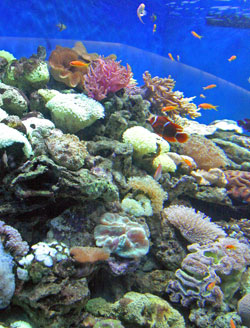
Most people like going up in Kuala Lumpur (to Menara KL or the Skybridge of KLCC) but for those who like going down, head to the Aquaria beneath the KL Convention Centre. Its walk-through glass tunnels are excellent for those who like to eye-ball marine creatures that they’ve only seen on the Discovery Channel.
Aquaria’s ocean of discovery is very popular with local families who flock here during the weekends and holidays so this is a good attraction in which to arrive early (it’s open daily from 10am to 10pm with last admission at 9pm). Some 5,000 marine organisms, representing 150 species, swim through the tunnels and live in displays and tanks. There is a theme based upon the great rainforests (yes forests, but they are interconnected in nature to the great oceans) of the world – Malaysian and the Amazon. This means they have both terrestrial and marine creatures on display.
Apart from walking through the tunnels to admire the sharks, Moray eels and rays, there are also many hands-on activities and feeding times when the staff get amongst the creatures to create a feeding frenzy. An artificial coral reef is a popular attraction as is the inevitable Aquaria shop strategically located at the exit. Contact: Aquaria KLCC, T: +603 2333-1888, www.klaquaria.com
To experience the homestay programmes in Sabah, visit www.sabah-homestay.org.com or www.misompuruhomestay.com or email Jeffrey Yahya @ Cobra at cobramisompuru@hotmail.com or jyrcobra@hotmail.com.
  |
 |