 A Conservation Conversation
By Chad Merchant
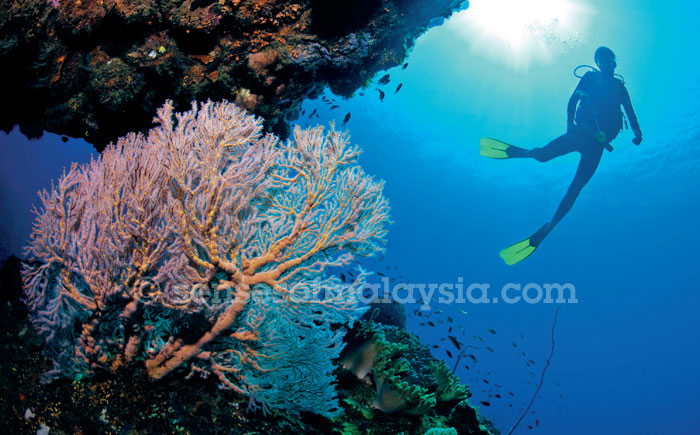
BEING ENVIRONMENTALLY CONSCIOUS IS ABOUT MORE THAN TAKING ACTION YOURSELF; IT'S ALSO ABOUT EDUCATING AND INSPIRING OTHERS TO DO THE SAME. CHAD MERCHANT TAKES A TRIP TO ONE OF MALAYSIA'S MOST BEAUTIFUL ISLANDS TO HELP PROTECT ITS NATURAL BEAUTY FOR FUTURE GENERATIONS.
 As our plane dipped and rolled to the right, the woman seated next to me seized her
armrests in a quiet panic, certain that we were about to crash short of the rain-soaked
runway.
As our plane dipped and rolled to the right, the woman seated next to me seized her
armrests in a quiet panic, certain that we were about to crash short of the rain-soaked
runway.
So began my first trip to Malaysia's Tioman Island. Located 32 km off the southeast
coast of the peninsula, this small island boasts some of the most spectacular scenery
in the country, both above and below the surface of the South China Sea. Naturally, of
course, our four-engine turboprop aircraft didn't crash, but the approach and landing
at Tioman's 900-metre seaside runway can be a hair-raising experience for those not familiar with short-field
landings. A rugged hillside rises at the end of the runway, so a steep descent and very late turn to the final
approach is required. Early-morning rainstorms had left the asphalt dotted with large puddles, which only
added to the drama. As we touched down safely under the calm, skilled hand of our Berjaya Air flight captain, a
spontaneous cheer erupted from the aircraft's complement of passengers. Welcome to paradise!
I was on hand to participate in the fourth semi-annual Tioman Island Clean-up Day, an event in which divers,
members of the media, and others are invited by Berjaya Tioman Resort to come and spend a weekend helping
to not only clean up the beaches and reefs that ring the small island, but to also help educate and engage the
island's local schoolchildren to do the same.
One of the best things about living in KL is the marvellous regional
travel opportunities afforded by Malaysia's enviable location and
myriad transportation options by land, sea, and air. World-class
island resorts can be reached in a matter of hours, along with more
fascinating mainland locales than can easily be counted. And on a
personal level, I've always felt a deep sense of responsibility to protect
and preserve our planet's natural resources. So, for me, it was a rare treat to
combine a hands-on exercise in conservation and environmental stewardship with a visit
to a Malaysian gem so rich in natural splendour that TIME Magazine named it one of the world's
most beautiful islands.
For a sustainable approach to ecological responsibility, however, more than one weekend of effort
is required. As the adage goes, "Give a man a fish and you'll feed him for a day; teach a man to fish
and you'll feed him for a lifetime."This concept applies to many things, not the least of which is
conservation. Actually doing the clean-up work is surely important, but to keep things going in the
right direction, educating others is every bit as critical. So with this in mind, we teamed up with
50 local schoolchildren who not only helped with the beach cleaning, but virtually led the charge
with their seemingly boundless energy and enthusiasm. In all, we filled 20 large garbage bags with
debris, some organic and natural, but far too much of it from the hands of humans.
Meanwhile, the divers were scouring the magnificent reefs surrounding Tioman and removing the
predatory Crown-of-Thorns sea star, a carnivorous organism which preys on the polyps of hard
corals. Since the corals cannot grow fast enough to overcome this predation, and since coral reefs
are of such vital importance in the marine ecosystem, human intervention is required to control
the population of these sea stars. On one group dive, over 120 Crown-of-Thorns were removed
from the reef.
I also attended two animal conservation workshops during my weekend in Tioman. Malaysia's
nesting sea turtle population numbers have plummeted in recent years and the plight of these
marine turtles has drawn local and international interest. After working for over 20 years with
marine turtles, professor and author Dr. Chan Eng Heng of the Turtle Conservation Centre in
Terengganu has expanded her efforts to take up the cause for the critically endangered river
terrapins, and presented not only an informative workshop for those of us participating in the weekend's events, but also conducted an entertaining and educational morning of activities for the Tioman kids. Malaysia is fortunate to have a number of marine turtles that nest here,
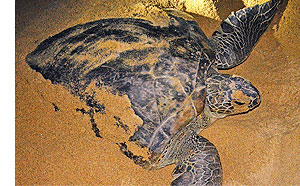
most along the east coast of the peninsula. Cherating Beach, for example, is well known as a
haven for the magnificent green turtle, whose females return to the beach they themselves
hatched at 20 to 30 years earlier to lay their own eggs. Conservationists there dig up the
eggs – sometimes only moments after they are laid – to protect them from poachers, then
take them to centres where they are incubated and hatched, then
finally return the hatchlings to the sea at the same beach where the
eggs were originally found. It's a remarkable commitment by these
people, and a real testament to the increasingly conservation-focused
mindset of Malaysians.
Another species suffering at our hands is the oft-mischaracterized
shark, slaughtered in the tens of millions for the shark fin soup trade
here in Asia. Mr Jonn Lu, Director of the Southeast Asia chapter of
Shark Savers gave a truly insightful multimedia presentation about
the scourge of shark finning, and the profound damage being done
to marine ecosystems and food webs when shark populations are
so drastically reduced, thanks to the demand for their fins. Though
Western expats are rarely consumers of shark fin soup, Jonn
explained, they can still exert an influence on the communities
in which they live. To that end, I realized, we can encourage our
friends and colleagues to refuse to buy or eat shark fin soup or
turtle eggs, and we can make that pledge ourselves, as well. By
reducing the demand, we can make a real difference. Furthermore,
by reaching out and really engaging with Malaysians who are
working so tirelessly to protect the natural resources and wildlife here and in the
region, not only can you help in a meaningful way, you will also enrich your own experience
here, whether you're visiting this wonderful country for a long weekend or setting down
roots for the long haul!
To learn more about these organizations as they make strides in turtle and shark conservation, please
visit their respective websites at www.turtleconservationcentre.org and www.sharksavers.org.


